
Let the Information Monopolies Crumble!

I've been programming for 30 years. I spent a lot of time acquiring both the skill and knowledge to build software systems. If you look at any well paying profession like tech workers, doctors, and lawyers, you see a common thread that binds them which is information monopolies. In other words, you pay these people a lot because they know a lot about something you don't. I don't know a lot about medical care so I defer solutions to my doctors because they have an information monopoly. The fear that people in these fields have is AI is going to crumble these monopolies in a way that's genuinely new. I'm going to focus on programming here because that's what I know.
It's not enough to have information available to be able to use it. Anyone today can go online and learn all sorts of things including programming. The resources are available for anyone to get really good at it. But it takes work to learn something. Learning changes your brain physically. Committing something to long-term memory requires repeated learning attempts that unwind DNA and synthesize new proteins. The brain works this way because it's efficient and no sense on learning something long term that isn't useful long term. For every year of school, it contributes 1-5 IQ points to someone's intelligence. That's because learning changes the way the brain works, what is stored and which connections you have. Learning changes the brain.
We pay a lot of money to people whose brains learned special things. We recognize that it takes a lot of work and energy to learn these things and therefore people should be rewarded for learning them. So despite the information for a lot of fields (especially programming) is available for free, it's not enough for it to be free, people must commit a lot of time and energy to use that information.
That's why AI is pissing a lot of people off. It feels unfair because it can suddenly do things you spent a lot of time and effort learning to do. And ironically, because the information is out there to be learned, it enabled the creation of these AIs in the first place. However, I am not angry that AIs can program now fairly competently because I grew up with the culture of the Free Software movement where the idea is that users should be able to control their own computers.
Computers are wonderful things. People are born with deeply flawed brains and computers can augment our thinking and improve it where it is weak. For example, instead of "guessing" some belief we can use a computer to create a simulation to check our mental models. This is a really powerful ability. To be able to create models and simulations to help make better decisions would benefit the world. It's one of the most powerful ways of both learning and understanding and it's possible to do with computers.
However most people do not use computers to compute. They use it like an old media, they read text and look at images and videos. We've created a lot of closed systems with all sorts of app stores so that people consume instead of create computer content. And the reason that is possible is because we have created information monopolies as engineers. People have to download an app because they don't have the knowledge to create their own. I don't think that's great for humanity. If everyone was capable of using computers to compute, we would have a much smarter society.
One area I see where most people make poor decisions is in investing. I ran a algorithmic quant fund for 7 years and the whole industry is about information monopolies. It's a very secretive industry where techniques, ideas, and approaches are kept very close as a competitive advantage. Last year I created ThetaEdge which is designed to crumble this information monopoly by allowing people to make better investment decisions using the 'secrets' of the trade.
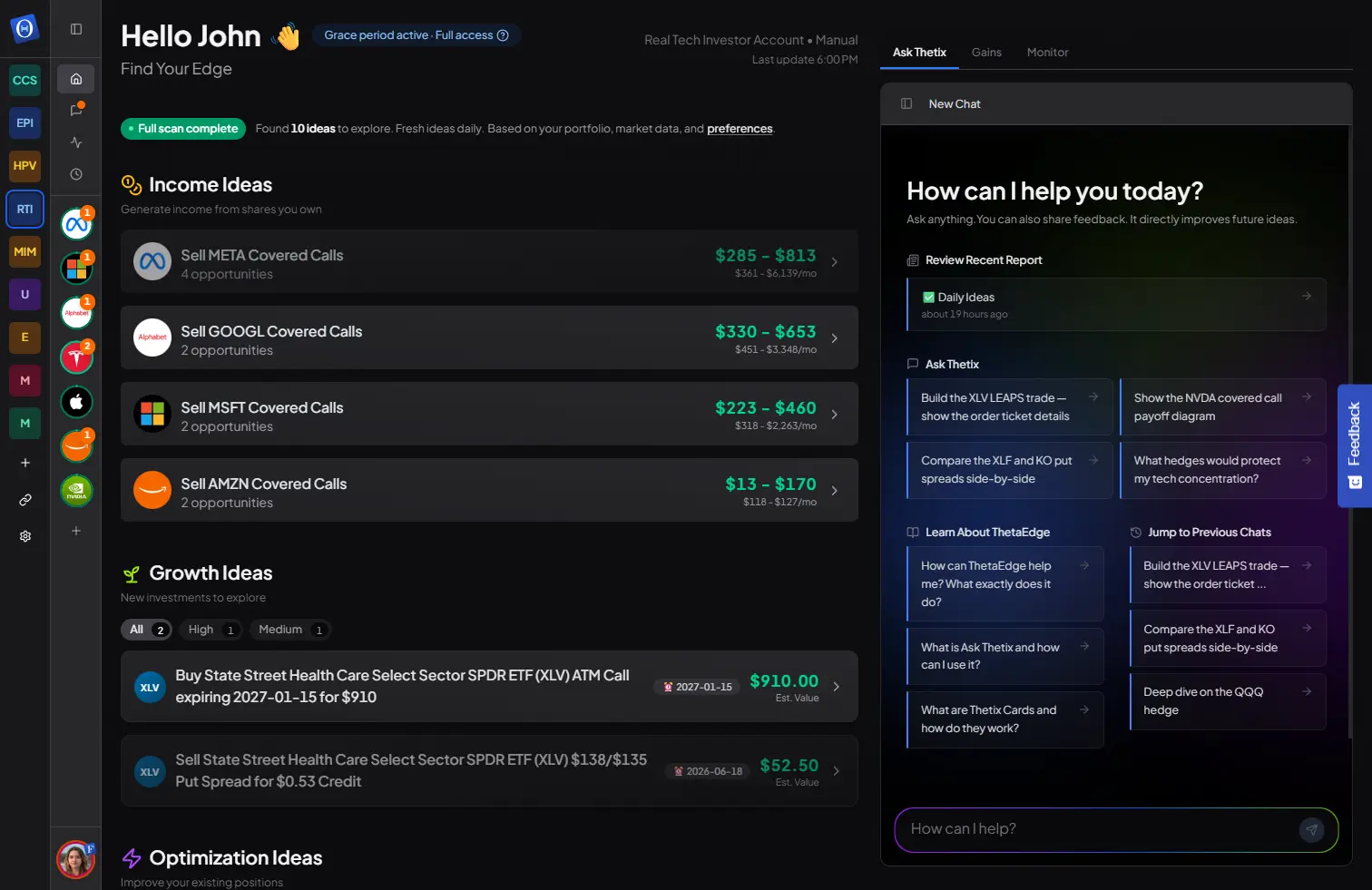
ThetaEdge has what I believe is the best financial AI in the industry. That's because I built it from the ground up using the knowledge and experience at the quant fund. My hope is that regular people having such a powerful system will help close the gap a little in financial markets.
Having a more intelligent society is why I'm not mad that LLMs are now able to code really good in the small. This creates an opportunity for regular people to gain control back of their machines. I've been working on another project called Abject which is designed to do just that. It's an Abject-Oriented OS for people to be able to create software that's connected and personal to them. It takes the idea of object oriented systems like Smalltalk, Erlang (in the Joe Armstrong sense), and the internet and asks "What happens when objects can explain to other objects how to use them". Each object in this system has a special message handler called "ask" which allows a natural language query on the object about how to use it. Abject is short for AI Object. I then built the Abject project to test how far I can take this idea. Is it useful? Oh, it's very very useful. In fact, I believe it's even more useful than Claude and OpenClaw.
Let me give you a concrete example. I was talking with a friend about how you cannot use correlation measures on data that has a non-linear relationship. Instead of explaining it, I asked the Chat in Abject to create a simulation.
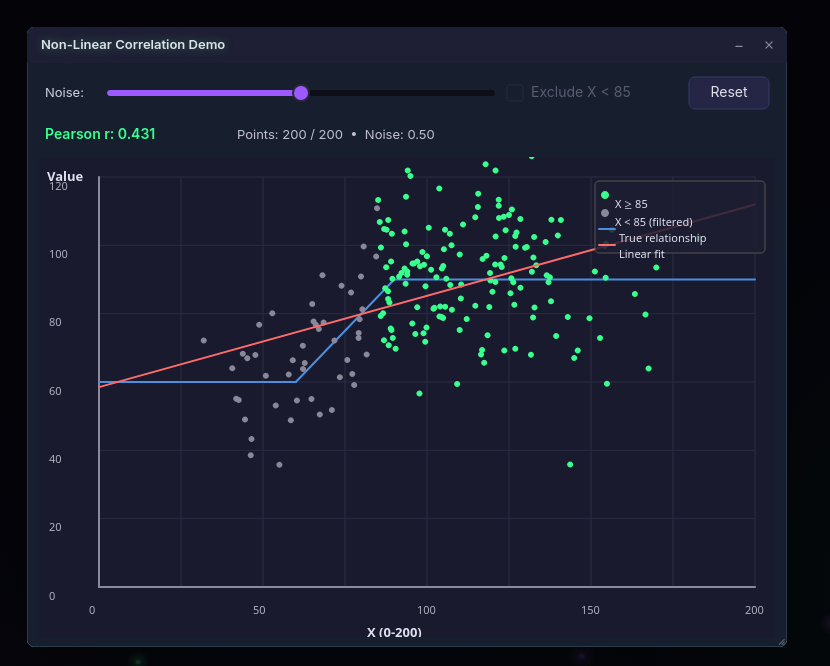
The simulation allows you to add noise to the function and see the correlation. That way I can just show them what I mean and they can get a deep intuition. Because While the math makes sense, it's another thing to play with a simulation and get a deeper understanding.
I've kept my notes in a TiddlyWiki for over 10 years. I have thousands of notes on there. I asked the chat to create a client for my TiddlyWiki so I can explore a graph of my notes.
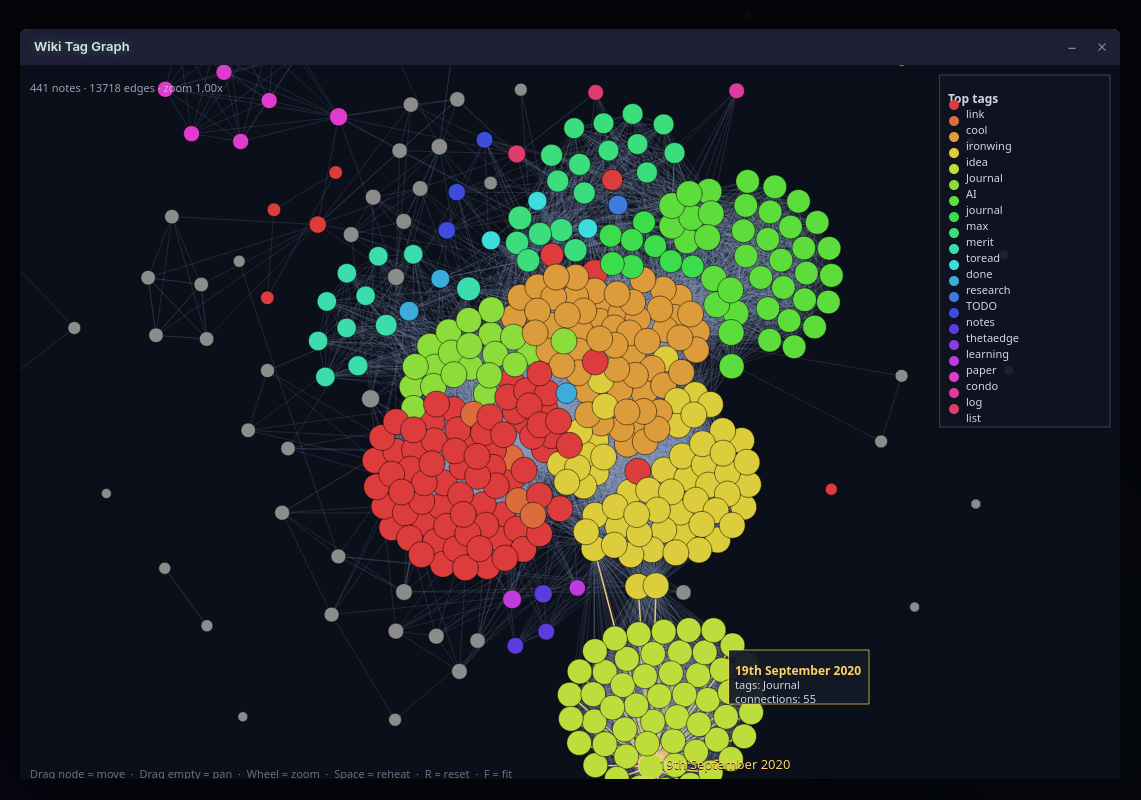
Previously, you relied on other people's software to do this. A lot of my friends use Obsidian because it has this feature built in. Now I don't have to switch to Obsidian, I can just create my own interactive visualization.
While I do have an Abject explorer and a code editor, a regular user doesn't ever have to see the code of the Abjects the create. This is what LLMs being able to program competently allows, regular people to create their own software that they control just for them. It allows them to use computers as they were meant to be used, to compute. Yes, the information monopoly must crumble to let this happen, but I think on the whole this could be a great thing. We can finally have a society where people can think smarter and make better decisions. I also don't think programming will go away because not everything can be done in the small. Some systems are really large and require deep expertise to make work. Programmers with deep domain expertise will still be in demand. And if you believe in Jevons Paradox then demand for software engineers should go up in the aggregate.
Go download Abject and try it out. It's free and open source: https://abject.world